
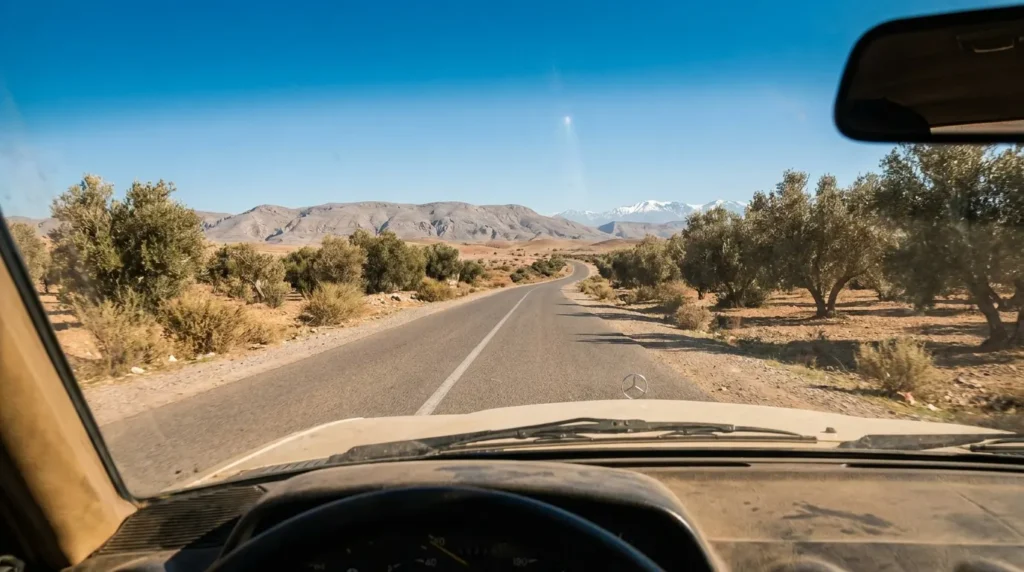

Golden hour approaches, casting long, dramatic shadows across barren, rocky hills. You leave the chaotic labyrinth of the medina behind, swapping crowded alleys for wide-open horizons. The transition happens shockingly fast. Within forty-five minutes, the bustling city streets dissolve into a serene, lunar landscape. Navigating the journey between these two contrasting worlds requires a highly specific plan.
The air temperature shifts noticeably as you climb the slight elevation toward the plateau. The overwhelming scent of moped exhaust and roasting spices fades, replaced by the crisp, dry aroma of baked earth and distant scrub brush. Travelers flock to this specific region to experience a slice of nomadic life without enduring the grueling ten-hour drive to the deep Sahara. Here, you find luxury and isolation sitting side by side.
Your trip to agafay marrakech should feel like an escape, not a stressful logistical puzzle. Many visitors severely underestimate the physical distance and the intense isolation of this unique stone desert. You cannot simply hail a standard city cab from the bustling center of Jemaa el-Fnaa and expect a smooth, comfortable ride to a luxury tent. Transport networks here operate on an entirely different set of unwritten rules.
Securing the right ride impacts your entire experience, especially if you plan to enjoy a multi-course sunset dinner or an overnight stay under the stars. Choosing the wrong vehicle might leave you covered in white dust, severely overcharged, or dangerously stranded after dark. You need accurate pricing, reliable vehicle options, and precise insider knowledge to make the journey effortless and memorable.
Table of Contents
Why Your Desert Transfer Requires Advance Planning
Understanding the specific geography of the region completely changes how you approach transportation. The stone desert, scientifically known as a ‘reg’ rather than a sandy ‘erg’, sits roughly thirty kilometers southwest of the city center. While the physical distance appears incredibly short on a digital map, the route involves navigating heavy urban traffic before transitioning onto the vital two-lane Route d’Amizmiz.
This specific regional road acts as a crucial artery for local commerce. It carries a heavy, unpredictable mix of overloaded farm trucks, speeding luxury SUVs, and unsteady motorbikes hauling agricultural goods. Your driver must expertly navigate this chaotic flow while you sit back and watch the snow-capped peaks of the High Atlas Mountains grow larger in your window. The drive itself serves as a fascinating cross-section of rural Moroccan life.
The final stretch of the journey frequently surprises first-time visitors. Once your vehicle turns off the main paved highway, you immediately encounter rugged, unpaved tracks leading directly to the individual camps. Standard sedans struggle violently on these rutted dirt roads, kicking up massive clouds of dust and risking severe tire damage. You must ensure your chosen transport possesses the heavy-duty clearance to handle the punishing terrain.
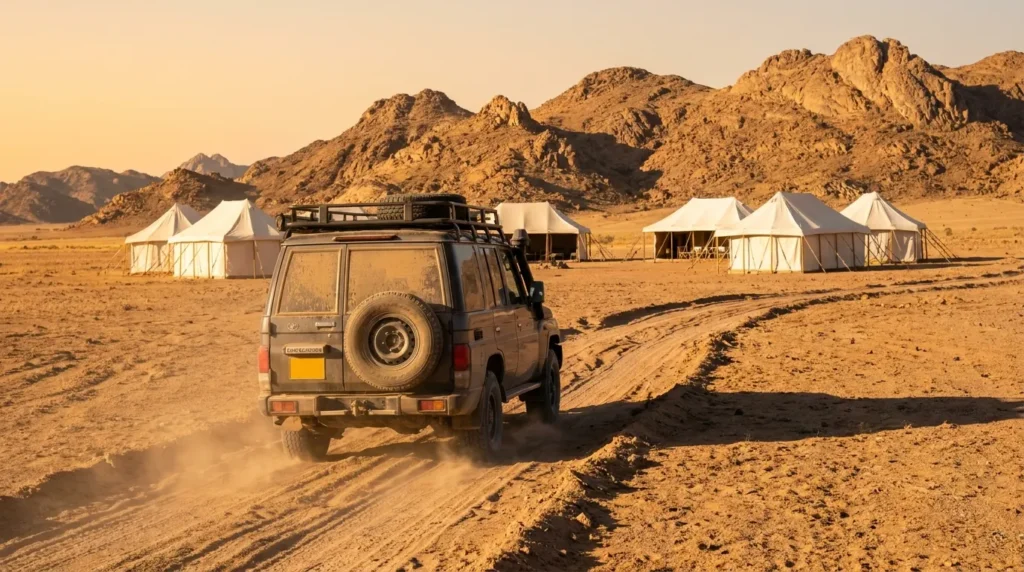
Isolation defines the powerful appeal of this rocky wasteland, but it also heavily complicates your logistics. Unlike the Palmeraie district located just outside the ancient city walls, you will absolutely not find idle taxis waiting outside the camps to take you back to civilization. Every single vehicle that arrives at a camp was specifically summoned for a specific guest. If you do not pre-arrange a round-trip transfer, you will find yourself completely immobilized.
Food lovers traveling solely for an evening dining experience face the absolute biggest transport challenges. Authentic dining experiences end late in the evening, long after the spectacular daylight fades. You will be traveling back through pitch-black rural roads with minimal to zero signage. Trusting a random street taxi to return for you at 10:30 PM represents a massive, unnecessary gamble.
The Core Guide: Comparing Every Transport Method
Navigating the complex transport market requires understanding the distinct tiers of service available to you. You essentially choose between budget-friendly local transit, mid-range shared group options, and premium private services. Each specific method carries distinct advantages and significant drawbacks that affect your overall comfort and wallet.
Hailing a Grand Taxi
Morocco operates a highly unique dual-taxi system that frequently confuses tourists. Small “Petit Taxis” handle short, metered trips strictly within city limits and legally cannot transport you to the stone desert. You must locate a “Grand Taxi,” usually a larger, older Mercedes sedan or a newer Dacia Lodgy minivan. These vehicles possess the proper legal authorization to travel between regional zones and rural districts.
Finding a Grand Taxi requires visiting specific, bustling taxi ranks located on the outskirts of the medina, such as the chaotic Bab Rob station. You will need to negotiate the fare forcefully and clearly before ever getting inside the vehicle. Drivers often quote heavily inflated tourist rates for this specific route. You must haggle to secure a fair price for a private hire, ensuring you do not have to wait for the taxi to fill up with six local passengers.
Expect a very raw, highly authentic experience if you choose this budget route. Grand Taxis rarely utilize air conditioning, opting instead for rolled-down windows that let in the hot breeze. The worn suspension on these older vehicles guarantees you will feel every single bump on the washboard dirt tracks. Most importantly, you must convince the driver to wait for you at the camp, or you will have zero options for a ride back.
Booking a Private Driver
Hiring a private car with a dedicated, professional driver represents the most reliable and comfortable method available. You can easily arrange these premium services through your riad concierge, a specialized local transport agency, or reputable online platforms. The vehicle will pick you up directly from your accommodation, entirely eliminating the need to haul your heavy luggage across the city to a dusty taxi stand.
Private transport fleets typically utilize modern, highly air-conditioned SUVs like Toyota Prados or comfortable passenger vans like the Mercedes Vito. These specialized vehicles effortlessly handle the rough, unpaved approaches to the luxury camps. You travel in complete climate-controlled comfort, fully insulated from the intense heat and the choking dust of the Amizmiz road. Your driver frequently acts as a subtle guide, answering cultural questions and pointing out specific landmarks.
The absolute greatest advantage of a private driver lies in the guaranteed, stress-free return trip. You book the service for a specific block of time, ensuring the vehicle waits securely in the camp’s parking area while you enjoy your sunset camel ride or multi-course dinner. You completely dictate the schedule. If you decide you want to leave an hour early because the evening wind picks up, your driver stands ready.
Utilizing Camp Shuttles
Almost every major luxury camp now offers a dedicated in-house transport service for their booked guests. When you reserve a day pass by the pool, a dinner reservation, or an overnight luxury tent, the confirmation email usually includes an easy option to add a shuttle transfer. This provides a wonderfully frictionless, zero-stress solution for travelers who absolutely hate negotiating prices.
Camp shuttles operate on strict, fixed schedules and group multiple guests together in one vehicle. You might need to walk to a central meeting point in the Gueliz neighborhood or wait patiently as the van makes several stops at different riads across town. This shared approach naturally adds roughly thirty to forty minutes to your total travel time. However, the pricing remains fully transparent, fixed, and conveniently added directly to your final camp bill.
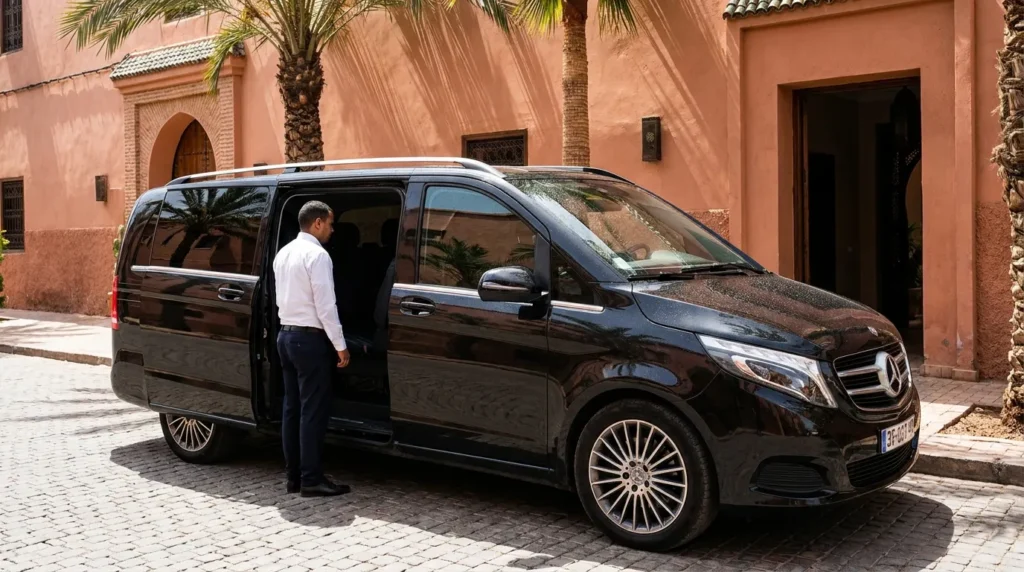
Be highly aware that shuttle drivers prioritize the camp’s master schedule over your personal preferences. If your dinner runs late and you fall behind, you cannot ask the driver to stop at a roadside shop to buy water on the way back. You trade personal flexibility for supreme convenience and peace of mind.
Renting Your Own Vehicle
Independent explorers often consider renting a car directly from Menara Airport upon arrival. Having your own set of keys provides the ultimate freedom to explore the surrounding Berber villages and valleys before finally heading to your tent. You skip the entire haggling process completely and travel strictly at your own desired pace.
Driving in the region requires high confidence and truly excellent spatial awareness. City traffic operates very aggressively, with motorbikes weaving unpredictably through massive roundabouts. Once you reach the rural roads, you must constantly watch for wandering livestock, pedestrians walking on the shoulder, and poorly marked speed bumps. Furthermore, rental agencies strictly prohibit taking standard sedans off-road, meaning you must rent a significantly more expensive 4×4 SUV to safely reach the camps.
Navigating the final dirt tracks in the pitch dark presents a very serious challenge for unguided tourists. GPS signals frequently drop out entirely in the rocky valleys. Missing a single, poorly marked turnoff can easily lead you miles down a dry, impassable riverbed. Renting a car perfectly suits adventurous travelers taking a multi-day road trip, but it causes massive unnecessary stress for a quick overnight stay.
| Transport Method | Estimated Cost (Round Trip) | Flexibility | Comfort Level |
|---|---|---|---|
| Grand Taxi | 400 – 600 MAD | Low (Must negotiate wait times) | Basic (No AC, bumpy) |
| Shared Camp Shuttle | 300 – 500 MAD (Per Person) | None (Fixed schedules) | Good (AC, modern vans) |
| Private Driver (SUV/Van) | 700 – 1200 MAD | High (You set the schedule) | Excellent (AC, smooth ride) |
| Rental Car (4×4) | 800+ MAD (Per Day + Gas) | Maximum | Varies based on vehicle |
Practical Tips for a Flawless Journey
Preparation completely separates a miserable transit experience from a highly enjoyable adventure. You control many specific factors that heavily influence the overall quality of your ride. Implementing a few highly strategic habits ensures you arrive at your destination relaxed, clean, and ready to enjoy the spectacular scenery.
- Carry exact change: Always keep small denomination notes (20s and 50s) readily available in your wallet. Drivers frequently claim they do not have exact change for a large 200 MAD note, forcing you to overpay or waste precious time searching for a rural shop to break the bill.
- Confirm the exact drop-off point: Some budget camps locate their vehicle parking areas a significant distance from the actual luxury tents. Explicitly ask your driver or the camp management if you will need to carry your heavy luggage across rocky, uneven terrain for the final stretch.
- Pack a comprehensive dust kit: Even sitting inside a heavily air-conditioned luxury vehicle, the fine white dust of the stone desert inevitably finds its way inside. Keep polarized sunglasses, a light protective scarf, and a large bottle of water easily accessible in your daypack during the bumpy ride.
- Download offline maps: Cellular service becomes notoriously unreliable and spotty once you leave the main paved highway. Download the complete regional map on your phone before leaving your hotel Wi-Fi so you can track your exact progress and gently verify the driver is taking the correct route.
- Time your departure strategically: The Amizmiz road experiences very heavy congestion during the late afternoon as farm workers return home and hundreds of tourists rush out for sunset dinners. Leave the city center by 4:00 PM to avoid the worst traffic and secure a premium viewing spot for the golden hour.
- Prepare for motion sickness: The final few miles involve intense, repetitive bumping over washboard dirt tracks. If you suffer from car sickness, take your preferred medication well before you leave the city limits, as the aggressive swaying of the vehicle cannot be avoided.
Common Mistakes When Traveling to the Stone Desert
Many eager travelers accidentally ruin their evening by making easily avoidable logistical errors. The harsh, unforgiving environment instantly amplifies small mistakes, turning minor inconveniences into major, trip-ruining frustrations. You must actively protect yourself from these highly frequent pitfalls.
Assuming popular ride-hailing apps work perfectly represents the absolute biggest trap. You might successfully summon a Careem or InDrive vehicle in the modern Gueliz district to take you out to the camps. However, these digital apps will almost always show zero available cars when you desperately try to book a return trip from the desert at midnight. You will be entirely stranded unless the camp staff takes pity on you and calls a local contact at a massive premium emergency rate.
Underestimating the brutal temperature drop catches thousands of tourists completely off guard every year. The ride out at 3:00 PM feels absolutely scorching, prompting you to wear light linen clothing and open-toed sandals. By the time your driver brings the car around for the long return trip at 11:00 PM, the desert air turns bone-chillingly freezing. You must pack a heavy sweater or a windproof jacket specifically for the late-night journey back to the city.
Paying the local driver the full round-trip fare upfront completely destroys your bargaining leverage. If you successfully negotiate a return trip with a Grand Taxi, strictly only pay for the outbound leg upon your initial arrival. You confidently hold the remaining balance until they safely drop you back at your riad door. Handing over all the cash immediately removes their financial incentive to wait three boring hours in the dark parking lot while you eat dinner.
Attempting to walk between different camps represents a highly dangerous miscalculation. On a map, two luxury camps might look incredibly close. In reality, deep, impassable ravines and confusing, featureless rocky hills separate them. Never dismiss your driver thinking you can simply hike over to a neighboring property for a drink. You will easily become lost in the harsh landscape.
Deeper Insight: Securing Your Ride Back in the Dark
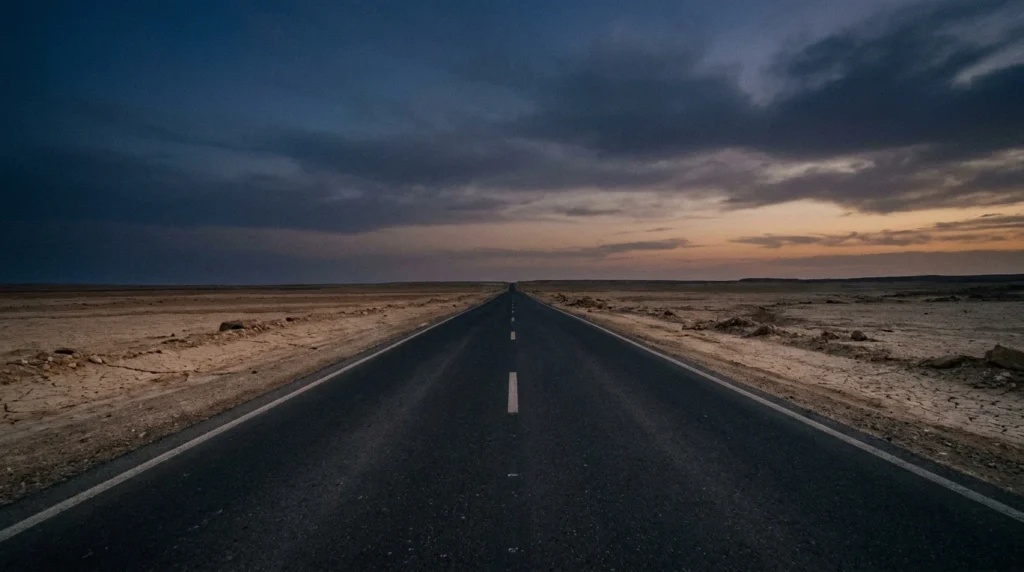
Standard travel guides frequently gloss over the harsh, physical reality of the late-night return journey. Driving through the stone desert at night requires highly specific local knowledge and immense driving skill. The unpaved tracks lack absolutely all streetlights, reflective safety markers, or clear directional signage. Everything looks utterly identical in the dark, and thick dust clouds from passing vehicles completely obscure all forward visibility.
This environmental reality is exactly why establishing a firm, friendly relationship with your driver matters immensely. If you hire a private car, the driver will normally wait in a designated area where the camp usually provides them with a basic, hot meal and sweet tea. Before you leave the vehicle, take a clear photo of the license plate and ask for the driver’s direct phone number or WhatsApp contact. Do not rely solely on reaching the agency dispatcher late at night.
Understand that your driver is navigating a truly treacherous route back to the bright lights of the city. The two-lane highway heavily fills with unlit horse-drawn agricultural carts, wandering stray dogs, and local motorbikes driving completely without headlights. A seasoned, professional driver will naturally slow down and drive extremely cautiously. Do not rush them or complain about the sluggish pace. Your physical safety depends entirely on their ability to react quickly to invisible hazards on the dark road.
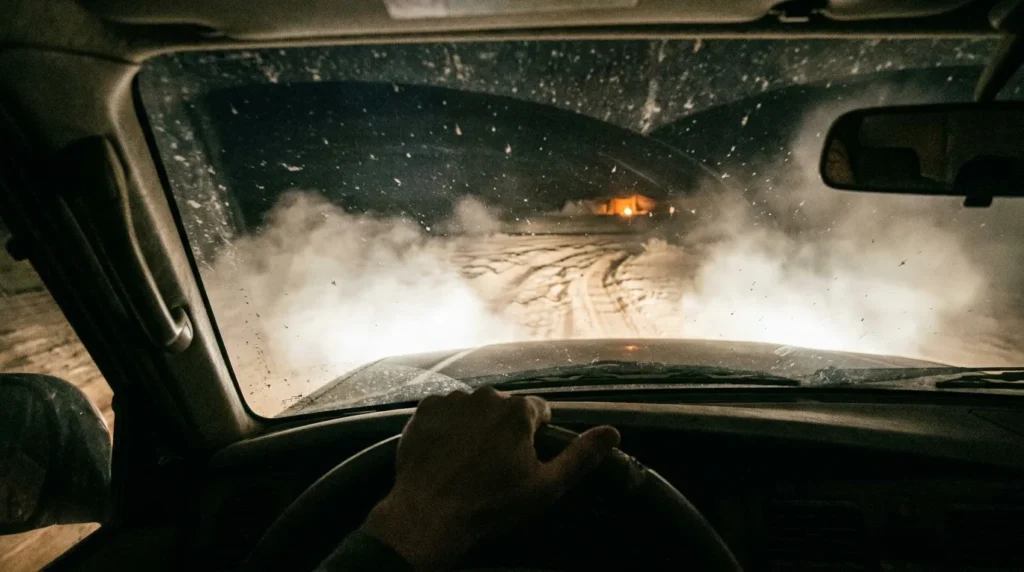
If you are attending a massive holiday event or a highly popular fire dinner show, the camp parking area rapidly transforms into chaotic gridlock when the music ends. Dozens of identical black vans and silver SUVs attempt to leave simultaneously through a single, narrow dirt bottleneck. Pre-arrange a highly specific, unmistakable meeting spot with your driver—such as “next to the third entrance lantern”—to completely avoid wandering through the dusty parking lot for twenty minutes breathing in heavy exhaust fumes.
You must also mentally prepare for random police checkpoints on the route back into the city limits. The local Gendarmerie frequently stops vehicles late at night to check driver registration and tourist transport licenses. Stay relaxed, keep your passport accessible in your bag, and let your professional driver handle the brief, routine interaction.
Frequently Asked Questions
How far is the Agafay Desert from the city center?
The total journey covers approximately 30 to 40 kilometers depending heavily on your exact camp location. Travel time typically ranges from 45 minutes to well over an hour. Heavy traffic leaving the urban center and the extremely poor condition of the final unpaved dirt tracks significantly impact your total transit time.
Can I use a normal city taxi for the transfer?
No, small city cabs, universally known as Petit Taxis, are legally restricted from leaving the strict urban boundaries. You must hire a much larger, regional vehicle known as a Grand Taxi. These operate from very specific stations and require aggressive price negotiation for private, long-distance trips.
Is the road to the stone desert completely paved?
The vast majority of the journey utilizes the fully paved, albeit busy, two-lane Route d’Amizmiz. However, the final few kilometers connecting the main highway to the individual luxury camps consist of rugged, unpaved, and highly rutted dirt tracks that absolutely require slow, careful driving.
Should I tip my private driver for the trip?
Yes, tipping your driver shows vital appreciation for safely navigating the chaotic city traffic and the hazardous, dark rural roads. A standard, highly appreciated tip ranges from 50 to 100 MAD for a round-trip transfer, given directly to the driver at the very end of your final journey.
Do shared camp shuttles operate late at night?
Most shared shuttles operate on a highly rigid schedule tied directly to the camp’s dinner service. The final shuttle back to the city usually departs immediately after the main entertainment concludes, typically around 10:30 PM or 11:00 PM. If you miss this specific van, you are stranded.
Can I bring my large luggage on a shared shuttle?
You must confirm this directly with the camp before booking. While private drivers possess ample trunk space, shared shuttles often pack in maximum passengers, leaving very little room for massive suitcases. If you are staying overnight, always inform the transport provider about your heavy luggage in advance.
Prepare for the Open Road
Securing the absolutely right transport perfectly turns a potentially stressful logistical hurdle into a highly scenic, deeply relaxing prelude to your desert adventure. Your vehicle choice directly influences exactly how much you enjoy the rugged, barren beauty of the stone desert. Pay the justified premium for a private driver if you highly value complete comfort and strictly guaranteed return trips, or bravely embrace the raw authenticity of a negotiated local taxi ride.
Do not leave your critical transport to chance or wait until the very last minute to frantically find a ride. Review the comprehensive prices in our guide, carefully decide which specific comfort level perfectly matches your travel style, and book your trusted transfer service today to ensure your journey to agafay marrakech is perfectly smooth and highly memorable.