
You step off the plane and the air hits you. It is thick, warm, and smells of woodsmoke and cumin. Your ears catch the distant rhythm of metal hitting metal. Somewhere in the labyrinth of the Medina, a craftsman is shaping a lantern just for you. Marrakech is not just a city. It is a sensory overload that demands you take a piece of it home.
You might feel overwhelmed by the narrow alleys and the shouting vendors. That is part of the magic. You are here to find treasures that tell a story, not mass-produced plastic. This guide will help you decide exactly what to buy in Marrakech and spot the real gems among the piles of sand and silk.
Table of Contents
Leather Goods That Last a Lifetime
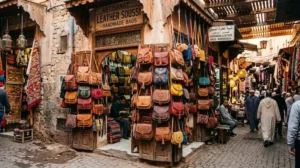
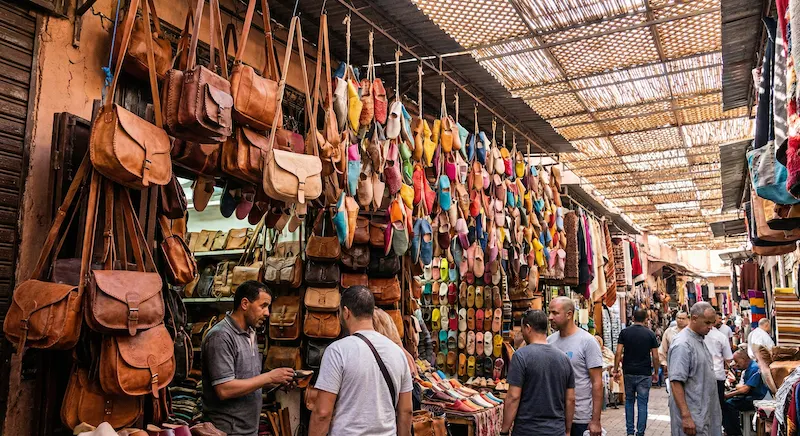
The smell of the tanneries is famous. It is sharp and earthy. While the smell might make you wrinkle your nose, the result is some of the finest leather in the world. You will see bags, belts, and jackets hanging from every shop front. Look closer. Feel the weight. Good Moroccan leather should feel soft but thick. It should smell like skin, not chemicals. If it smells like fish, walk away. That leather was not cured properly.
The Famous Babouche Slippers
You cannot leave without a pair of babouches. These pointed-toe slippers are the unofficial uniform of the Medina. You will find them in every color imaginable. Some have hard rubber soles for walking outside. Others have soft leather soles for lounging at home. Check the stitching. You want deep, tight threads that won’t snap after a week of wear. A good pair feels like a second skin on your feet.
Travel Bags and Satchels
Imagine carrying a weekender bag that looks better the more you use it. Goatskin is common here because it is tough and flexible. Camel leather is even sturdier. It is rarer and costs more, but it is nearly indestructible. When you look at what to buy in Marrakech, a solid leather duffel is a top choice. Test the zippers. If they catch now, they will break later. Ask the shopkeeper to show you how the leather reacts to a bit of water or oil. It should darken and then glow.
The Golden Liquid and Earthy Spices
The Spice Square, or Place des Épices, is a riot of color. You see mounds of red paprika, yellow turmeric, and green dried mint. It looks like an artist’s palette spilled onto the pavement. But these are more than just ingredients. They are the heartbeat of Moroccan culture. You will find yourself drawn to the scents of Ras el Hanout and the delicate threads of saffron.
Pure Argan Oil
People call it “liquid gold” for a reason. Real argan oil only comes from Morocco. You will see it sold in clear plastic bottles on the street. Do not buy those. Sunlight ruins the oil. Look for dark glass bottles. Pure argan oil has a slight nutty scent if it is for cooking. If it is for your skin, it should be almost odorless and soak in quickly. It should never feel greasy for long. You are looking for the “Cooperative” seal. This ensures the women who crack the nuts by hand get a fair wage.
Saffron and Ras el Hanout
Saffron is the most expensive spice in the world. In Marrakech, you can get it for a fraction of the price back home. Authentic saffron is deep red. It does not have yellow bits. If you put a thread in water, the water turns yellow, but the thread stays red. If the thread turns white, it is fake. Then there is Ras el Hanout. The name means “head of the shop.” It is a blend of the best spices the merchant has. Every shop has a different secret recipe. Some have thirty ingredients; others have a hundred. Use it on roasted chicken and you will be transported back to the Medina every time.
Moroccan Carpets and Textiles
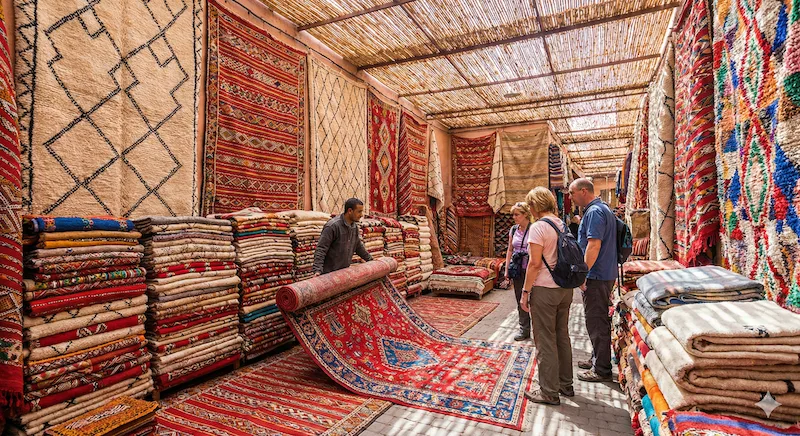
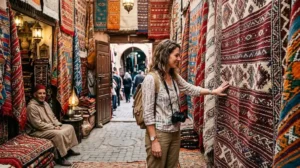
Buying a rug in Marrakech is a rite of passage. You will be invited to sit. You will drink mint tea. The seller will flip rug after rug in front of you. It is a dance. You have to know what you are looking at to win. Every tribe has its own patterns. Every color tells a story of fertility, protection, or the desert sky.
Beni Ourain and Boucherouite Rugs
Beni Ourain rugs are the ones you see in high-end design magazines. They are thick, cream-colored wool with simple black geometric lines. They come from the High Atlas Mountains. They are warm and heavy. On the other hand, Boucherouite rugs are “rag rugs.” They are made from recycled scraps of fabric. They are vibrant, chaotic, and incredibly modern. They are easier to wash and perfect for a kitchen or a kid’s room. When you consider what to buy in Marrakech, think about your space at home. A rug is a heavy investment, but most shops can ship it across the ocean for you.
- Check the back: The knots should be slightly uneven. That proves a human made it, not a machine.
- The burn test: Pull a tiny stray thread and light it. Real wool smells like burnt hair and turns to ash. Synthetic fibers melt and smell like plastic.
- Flip the corner: Look for the weaver’s signature. Sometimes it is a small change in pattern that marks her work.
The Glow of Moroccan Metalwork
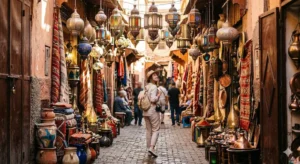
As the sun sets, the lanterns of Marrakech come to life. They cast shadows that look like lace against the walls. This is the work of the “maâlems,” the master craftsmen. They spend days poking thousands of tiny holes into brass and copper sheets. It is exhausting work that requires a steady hand and a lot of patience.
Brass Lanterns and Chandeliers
Brass is the king of metals here. You can find lanterns that sit on the floor or hang from the ceiling. Some are silver-plated, while others have the warm glow of raw copper. Check the weight. Thin, flimsy metal will dent during your flight home. You want something that feels solid. Look at the patterns. Are the holes clean? Or are they jagged? The best pieces have intricate designs that seem to flow without a beginning or end.
Tea Sets and Trays
Drinking tea is a way of life. You need the right tools to do it properly at home. A traditional tea set includes a silver teapot with a long curved spout, a large carved tray, and colorful glasses. The long spout is for pouring the tea from a height to create foam. It is a show. When you buy a teapot, check that the handle is attached firmly. You don’t want boiling tea in your lap. Look for the “925” stamp if you are buying real silver, though most “silver” in the market is actually a mix of nickel and brass.
| Item | Purpose | What to look for |
|---|---|---|
| Silver Teapot | Brewing Gunpowder tea and mint | Heat-resistant handle and long spout |
| Carved Metal Tray | Serving the glasses and pot | Hand-etched geometric patterns |
| Tea Glasses | Drinking the hot tea | Gold leaf or colorful enamel designs |
| Sugar Box | Holding large sugar cones | Matching metalwork with a tight lid |
Ceramics and Pottery from Safi and Fez
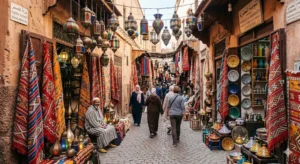
You will see walls of plates in Marrakech. They come in blues from Fez and greens from Tamgroute. The pottery here is coarse and earthy. It feels like the soil it came from. Whether you want a decorative bowl or a functional cooking vessel, you have plenty of choices.
The Traditional Tagine
If you want to cook like a Moroccan, you need a tagine. It is a two-piece clay pot with a conical lid. The shape traps steam and drips it back onto the food. This makes the meat incredibly tender. Be careful here. Many tagines in the souks are for decoration only. They are painted with lead-based glazes that are toxic if heated. If you want to cook with it, buy a plain, unglazed brown clay tagine. It is humble, but it is safe and works the best. If you buy a painted one, use it for serving bread or fruit only.
Hand-Painted Bowls and Plates
The geometric patterns on Moroccan plates are mind-boggling. They represent the infinite nature of the universe. You can find sets of small bowls for olives or large platters for couscous. The edges should be smooth. Tap the side of the plate gently. A high-pitched “ring” usually means the ceramic is dense and well-fired. A dull “thud” might mean there is a crack hidden under the glaze.
Berber Jewelry and Silver
Jewelry in Morocco is a form of currency. Historically, Berber women wore their wealth in the form of heavy silver necklaces and bracelets. These pieces are bold and chunky. They use amber, turquoise, and coral. You will not find dainty gold chains here. You will find statements.
Enamel and Coin Necklaces
Berber silver often features “tiznit” work, which is colorful enamel applied to the metal. You will see yellow, green, and blue designs. Many pieces include old coins from the French protectorate era or even earlier. These aren’t just accessories. They are amulets meant to ward off the evil eye. When you look at what to buy in Marrakech, a piece of silver jewelry is a portable memory of the desert.
The Hamsa or Hand of Fatima
The Hamsa is everywhere. You see it on doors, on car mirrors, and around necks. It is a palm-shaped symbol with five fingers. It is believed to provide protection. You can find Hamsas made of wood, brass, or silver. Some are very simple. Others are covered in intricate filigree. It is the perfect small gift to bring back for friends.
The Art of the Deal
You cannot talk about shopping in Marrakech without talking about haggling. It is not a fight. It is a conversation. If you pay the first price mentioned, the shopkeeper might actually be disappointed. They enjoy the back-and-forth. It is how you show respect for the item and the craft.
How to Haggle Like a Local
Start by offering about one-third of the original price. The seller will act shocked. He might tell you about his children or how long it took to make. Stay firm but stay smiling. You will eventually meet in the middle, usually around half of the starting price. If you cannot reach a price you like, thank them and walk away. Often, they will call you back with a better offer. If they don’t, it means your price was too low. Never start haggling if you have no intention of buying. That is considered rude.
Tips for Carrying Your Treasures
Marrakech is a place where you buy more than you planned. Your suitcase will be tight. Pack a foldable duffel bag in your luggage. Use your clothes to wrap ceramics and glass lanterns. Most rug shops are pros at rolling carpets into small, tight bundles with handles. If you buy a massive lantern or a set of chairs, use the shipping agents near the post office in the Gueliz district. They know how to handle customs and fragile items.
FAQs About Shopping in Marrakech
What is the best thing to buy in Marrakech?
It depends on your taste, but leather goods, argan oil, and handmade rugs are the most iconic. These items are tied deeply to Moroccan heritage and are often cheaper here than anywhere else.
How do I know if the argan oil is real?
Check the packaging and the scent. Real argan oil should be in dark glass and have a very faint nutty smell. Avoid clear bottles sold in the sun, as the oil degrades quickly. Look for certified organic labels.
Can I use a credit card in the souks?
Big shops for rugs and high-end leather will accept cards, but you will pay a fee. For the smaller stalls and food, you need cash. Keep small denominations of Moroccan Dirhams with you. It makes bargaining much easier.
Is it safe to ship items home?
Yes, many reputable shops have long-standing relationships with international shippers. Always get a tracking number and a clear receipt. If you are worried, you can take the item to a specialized shipping company yourself.
Your Journey Starts in the Alleys
Marrakech is a city that gives back what you put into it. If you rush through the souks with your head down, you will miss the soul of the place. Stop. Look at the way the light hits the spice piles. Listen to the stories of the weavers. Every item you buy is a bridge between your world and theirs. You are not just a tourist. You are a patron of ancient arts that have survived for centuries. Now that you know what to buy in Marrakech, get out there. Find that one piece of the Medina that speaks to you. Your suitcase might be heavy, but your stories will be even heavier. Go find your treasure today!