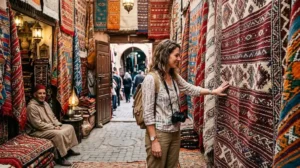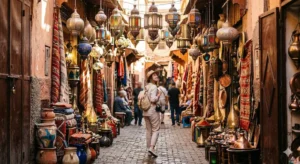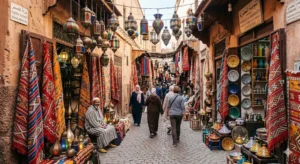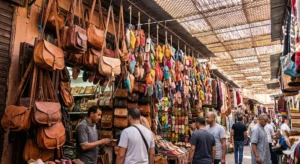


As you wander deeper into the labyrinthine alleys of the old city, the scent of the air begins to shift. The sweet aromas of cardamom and cinnamon from the spice stalls gradually give way to something richer, earthier, and undeniably distinct. You hear the rhythmic tapping of small hammers against brass rivets and the low hum of artisans conversing over mint tea. Suddenly, you turn a corner and find yourself surrounded by walls draped in rich amber, deep mahogany, and vibrant indigo. You have arrived in the heart of the leather district.
For centuries, the Red City has been a global epicenter for artisanal leathercraft. Historically, merchants would travel for months across the Sahara just to trade for these prized textiles. Today, acquiring genuine Marrakech leather bags remains one of the most sought-after experiences for travelers visiting Morocco. Whether you are hunting for a rugged camel-hide travel duffel, a sleek crossbody purse, or a classic bohemian messenger bag, the sheer volume of options can be incredibly overwhelming.
Finding the perfect piece requires more than just picking a color you like. The medina is filled with masterfully crafted heirloom pieces, but it also hides mass-produced, chemically treated tourist traps. If you want to walk away with a high-quality accessory that will last a lifetime, you need to understand how the leather is made, how to identify genuine quality, and exactly where to look among the thousands of identical-looking stalls.
This comprehensive guide will transform you from a hesitant browser into a confident buyer. By the time you finish reading, you will know exactly how to evaluate the stitching, decode the distinct smells, and navigate the specific souks to find the best leather shops hidden within the medina.
Table of Contents
The Ancient Art of Moroccan Leathercraft: Behind the Scenes
To truly appreciate the value of your purchase, you must first understand the grueling, ancient process that brings these items to life. Unlike modern Western factories that rely entirely on automated machinery and synthetic chemicals, traditional Moroccan leather production looks almost exactly as it did in the 11th century.
The Role of the Tanneries (Bab Debbagh)
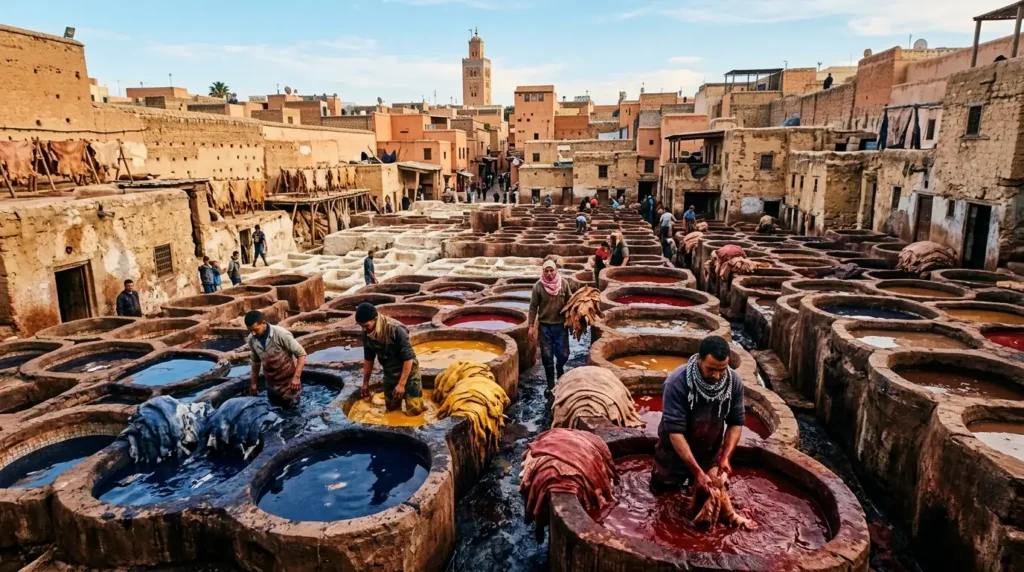
If you venture to the eastern edge of the medina, near the Bab Debbagh gate, you will find the city’s historic tanneries. Here, hides undergo a rigorous curing process. The skins are first soaked in a mixture of water, limestone, and pigeon droppings. While this sounds unappealing, the ammonia in the pigeon guano acts as a natural softening agent, breaking down the tough fibers of the hide without destroying its integrity.
After softening, the hides are transferred to massive stone vats filled with natural dyes. Artisans use poppy flower for red, indigo for blue, henna for orange, and saffron or pomegranate for yellow. Men stand waist-deep in these vibrant vats, manually stomping the hides to ensure the color penetrates deeply. This manual labor is backbreaking, yet it results in a naturally dyed, incredibly resilient material that forms the foundation of all authentic Marrakech leather bags.
Traditional vs. Chemical Tanning
As tourism has boomed, some modern workshops have started taking shortcuts, using harsh industrial chemicals to speed up the tanning process. Chemically tanned bags are often stiffer, have a glossy, artificial sheen, and lack the rich, varied patina of traditionally tanned hides. Worse, they lack the durability that makes Moroccan goods famous. Knowing the difference between these two methods is your first line of defense when shopping.
Decoding the Hides: What Are Marrakech Leather Bags Made From?
Not all leather is created equal. The type of animal hide used drastically affects the bag’s weight, durability, softness, and price. When you step into a shop, the vendor might simply say “genuine leather,” but you should always ask specifically what animal it comes from.
Camel Leather: The Rugged Workhorse
If you are looking for a massive weekender bag, a heavy-duty backpack, or a sturdy briefcase, camel leather is your best option. Camels endure harsh desert climates, making their skin incredibly thick, tough, and resistant to punctures or tears. Camel hide is distinct; it has a highly visible, porous grain pattern and feels incredibly stiff when new. It requires a break-in period, much like a good pair of hiking boots, but it will eventually soften while retaining its indestructible nature.
Cowhide: The Versatile Standard
Cow leather represents the middle ground. It is thick enough to provide structural integrity to structured handbags and satchels but pliable enough to be comfortable against your body. Most of the standard messenger bags and standard backpacks you see hanging outside the medina stalls are crafted from cowhide. It takes dyes exceptionally well, resulting in deep, uniform colors.
Sheep and Goat Skin: The Delicate Touch
Goat and sheep skins are the softest, most lightweight leathers available in the souk. Because the skin is thin, it is rarely used for large travel bags that need to hold heavy weight. Instead, you will find this buttery-soft material used for delicate crossbody purses, small clutches, soft Moroccan poufs, and traditional babouches (slippers). While beautifully soft, goat leather requires gentler handling to prevent scuffing.
The Master Class: How to Spot Quality Leather in the Souks
You have found a shop with a stunning display. A particular vintage-style satchel catches your eye. Before you even think about asking for the price or starting the bargaining process, you must perform a thorough quality inspection. Do not let the shopkeeper rush you. Take the bag in your hands and execute these three critical tests.
1. The Crucial Smell Test
Bring the leather right up to your nose. Authentic, traditionally tanned Moroccan leather has a distinct, earthy, pungent scent. Some describe it as a raw, animalic smell. This is completely normal and a sign of natural tanning. However, if the bag smells sharply of gasoline, strong plastic, or harsh chemical solvents, put it down immediately. This indicates cheap, rushed chemical tanning that will likely crack and peel after a few months of use.
2. Hardware and Stitching: The Hidden Fail Points
The leather itself might outlast you, but the bag is only as strong as its weakest zipper. Artisans in the medina are masters of leather, but they often import cheap metal hardware from overseas to save costs. Inspect every single zipper. Zip it back and forth rapidly five times. If it catches or feels gritty, it will break. Check the buckles; do they feel heavy and solid, or light and hollow like tin?
Next, look closely at the seams. High-quality Marrakech leather bags are double-stitched using thick, heavy-duty waxed thread. If you see single stitching with thin, flimsy cotton thread, the bag will inevitably burst open the first time you overpack it.
3. The Lining Inspection
Open the bag and pull the lining outward. Many beautiful bags are lined with cheap, synthetic polyester that tears easily and traps odors. The best quality bags either have no lining at all (exposing the raw, suede-like underside of the leather) or are lined with thick, durable canvas or strong cotton twill.
Navigating to the Best Leather Shops in the Medina

The medina is vaguely organized by trade. While you will find random leather goods scattered near the main square of Jemaa el-Fnaa, these are often lower quality items aimed at impulse buyers. To find the master craftsmen, you need to head deeper into the dedicated artisan quarters.
Souk des Maroquiniers (The Leather Market)
Your primary destination should be the Souk des Maroquiniers. Located just north of the famous Souk Smarine, this area is a concentrated hub of leather workshops and showrooms. Here, the middleman is often eliminated. You are frequently buying directly from the family that cut and sewed the hide. The shops are smaller, darker, and packed floor-to-ceiling with inventory. Take your time wandering through this specific sector; the density of shops means competition is high, which gives you better leverage for quality and price.
Place des Épices and Surroundings
The square known as Place des Épices (Spice Square) is surrounded by several multi-level shops that offer a curated, boutique experience. While prices here might start slightly higher than deep within the working souks, the quality control is generally excellent. These shops tend to feature more contemporary designs, blending traditional Moroccan techniques with modern Western fashion trends. If you want a bag that looks at home on the streets of Paris or New York, the shops radiating off this square are an excellent starting point.
The Fixed-Price Benchmark: Ensemble Artisanal
If the chaotic energy of the souks feels intimidating, start your journey at the Ensemble Artisanal, located on Avenue Mohammed V just outside the medina walls. This is a government-sponsored complex where artisans work on-site and sell their goods at fixed, non-negotiable prices. While you won’t get the thrill of haggling, the quality is guaranteed. Even if you plan to buy in the medina, visiting the Ensemble Artisanal provides you with an essential mental baseline for what top-tier craftsmanship looks like and exactly how much it should cost.
A Realistic Price Guide: What Should You Pay?
Pricing in the medina is fluid, depending on your haggling skills, the time of day, and the vendor’s mood. However, having a general framework prevents you from grossly overpaying.
- Small Accessories (Wallets, Belts, Small Pouches): You should aim to pay between 100 and 200 MAD (Moroccan Dirhams).
- Small to Medium Crossbody Bags: For a standard goat or cowhide purse, a fair negotiated price falls between 300 and 500 MAD.
- Large Messenger Bags and Briefcases: Expect to pay between 600 and 900 MAD for thick cowhide with good hardware.
- Large Camel Leather Travel Duffels: These require massive amounts of hide. A high-quality weekender bag should land between 1000 and 1800 MAD, depending on the size and internal canvas detailing.
Remember, if a price seems too good to be true (e.g., a massive travel bag for 300 MAD), you are likely buying imitation leather or an item with severe structural flaws hidden from plain sight.
How to Care for Your Moroccan Leather Purchase
Your journey with your new bag does not end when you board your flight home. Moroccan leather requires specific care, especially during the first few months of ownership.
Banishing the “Medina Smell”
The most common question travelers ask is how to remove the strong, earthy tannery smell from their new bag. Do not panic; this scent is proof of authenticity, and it will fade. To speed up the process, never seal the bag in a plastic container. Leather needs to breathe. Stuff the bag with crumpled newspaper (which absorbs odors and moisture) and leave it in a dry, well-ventilated area away from direct, scorching sunlight. Some travelers find success placing an open box of baking soda near the bag for a few days to neutralize the air around it.
Conditioning and Weatherproofing
Because these hides are naturally tanned, they can dry out if you live in a low-humidity environment or experience harsh winters. Once the initial smell has faded (usually after a month of use), treat your bag with a high-quality, natural leather conditioner or beeswax cream. Apply it with a soft cloth in circular motions. This will instantly hydrate the hide, slightly darken the color to a rich patina, and provide a vital layer of water resistance against unexpected rain showers.
Ethical Considerations: Supporting the Right Artisans
When you purchase leather goods in Marrakech, your money directly impacts the local economy. By taking the time to venture into the Souk des Maroquiniers and buying from shops where you can visibly see the sewing machines and leather scraps in the back room, you are supporting the artisans directly.
Avoid buying from the massive, aggressive emporiums near the tourist bus drop-offs. These locations often act as middlemen, taking massive cuts of the profit and squeezing the actual craftsmen who create the goods. Taking a few extra hours to explore the winding alleys not only yields a better price for you but ensures a fairer wage for the talented individuals keeping this ancient craft alive.
Conclusion: Carrying a Piece of History
Shopping for Marrakech leather bags is an adventure that requires patience, a keen eye, and an appreciation for traditional methods. You are not simply buying a vessel to carry your laptop or your travel gear; you are investing in a piece of functional art. The slight imperfections in the dye, the rugged thickness of the hide, and the heavy stitching all tell a story of a craft that refuses to be modernized out of existence.
Armed with the knowledge of how to test for quality, where to find the best workshops, and how to care for your purchase long after you return home, you can confidently navigate the souks. Embrace the sensory overload, enjoy the ritual of the haggle, and take home a leather masterpiece that will weather, soften, and grow more beautiful with every journey you take.
Frequently Asked Questions About Marrakech Leather Bags
Why do authentic Marrakech leather bags have such a distinct smell?
The strong, earthy odor comes from the ancient, traditional tanning process used in the medina. Instead of modern industrial chemicals, the tanneries use natural ingredients—including limestone and pigeon droppings—to soften the hides, followed by natural plant dyes. This smell is actually the best indicator that you are buying a genuine, handcrafted item rather than a mass-produced factory bag.
How can I get the strong tannery smell out of my new leather bag?
Never seal the bag in plastic, as the leather needs to breathe. To eliminate the odor, stuff the bag with crumpled newspaper (which naturally absorbs moisture and smells) and leave it in a dry, well-ventilated room for a few weeks. You can also place an open box of baking soda nearby. Once the smell fades, treat the leather with a natural conditioner to lock in a more pleasant scent.
Are prices for leather bags fixed, or do I need to haggle?
Unless you are shopping at a government-regulated center like the Ensemble Artisanal or a modern boutique in Gueliz, you are expected to haggle. The initial price a vendor quotes in the souk is usually double or triple the final acceptable price. Always negotiate playfully and respectfully, aiming to settle around 40% to 50% of their opening offer.
Can I pay for leather goods with a credit card in the medina?
Cash is king in the souks. While a few of the larger, high-end leather showrooms might accept credit cards (often adding a 3% to 5% surcharge), the vast majority of the small workshops in the Souk des Maroquiniers operate exclusively in Moroccan Dirhams (MAD). Always bring enough cash to cover your expected purchases to secure the best negotiated price.
Is camel leather better than cowhide for travel bags?
It depends on your needs. Camel leather is significantly thicker, stiffer, and more puncture-resistant, making it the absolute best choice for heavy-duty travel duffels or rugged backpacks that will take a beating. Cowhide, however, is lighter and more pliable from day one, making it ideal for everyday messenger bags, briefcases, and standard crossbody purses.
Ready to uncover more hidden gems?
Finding the perfect leather bag is just one incredible experience the medina has to offer. From navigating historic palaces to finding the best rooftop cafes for sunset, your adventure is just beginning. Explore our ultimate guide to the best things to do in Marrakech and craft a travel itinerary you will never forget!