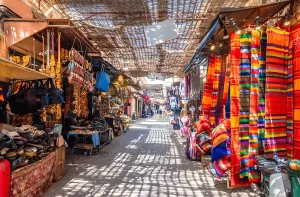
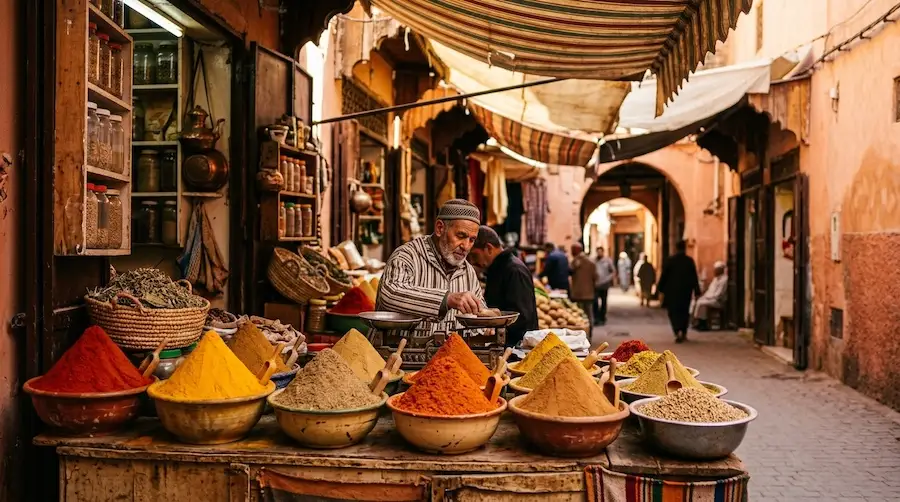

The smell hits you before anything else. Somewhere between the leather quarter and the carpet stalls, a warm cloud of cumin, cinnamon, and dried rose petals wraps itself around you — and suddenly you understand why travelers have been navigating these lanes for centuries. Shopping for spices in Marrakech is one of the most rewarding things you can do in Morocco, but only if you know what you’re looking at. Without a little preparation, the sensory overload alone can send you home with the wrong things at the wrong prices.
This guide covers everything: which spices matter, where the best markets are, how to spot quality from a distance, what pitfalls to sidestep, and how to bring those flavors home without a single problem at customs. By the time you’ve finished reading, the medina’s spice quarter will feel less like a maze and more like an opportunity.
Table of Contents
Why Marrakech Has Been a Spice Capital for Over 900 Years
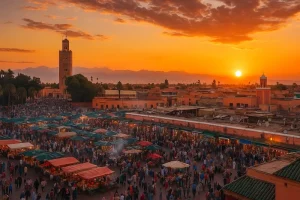
Marrakech didn’t become synonymous with spice trading by accident. Founded in 1070 by the Almoravid dynasty, the city was deliberately positioned as the meeting point between sub-Saharan Africa and the Mediterranean world. Caravans arriving from Timbuktu and the Niger River brought gold, salt, and aromatic goods northward. Traders from Andalusia, the Levant, and beyond came southward with silks and ceramics. The medina’s souks grew from this collision of commerce — and the spice merchants sat at the center of it all.
That trading heritage is still physically present. The walled medina — a UNESCO World Heritage Site since 1985 — still organizes itself by trade, the way it has for nearly a millennium. Spice sellers cluster together, dyers occupy their own quarter, leather workers have theirs. When you walk into Rahba Kedima, you’re stepping into a commercial structure that predates the printing press. The spices themselves haven’t changed much either: the same cumin, coriander, cinnamon, and saffron that moved along those ancient routes are still sold by the gram from woven baskets and open sacks.
Understanding this history changes how you shop. You’re not browsing a tourist market — you’re participating in a living institution. The vendor weighing out your ras el hanout learned the trade from a parent who learned it from a grandparent. That context is worth something, both culturally and in terms of the quality you can expect from the right stalls.
The Spices of Marrakech You Actually Need to Know
Walk into any stall in the Moroccan spice market and you’ll face dozens of options simultaneously. Focus on these — they’re the foundation of Moroccan cooking and the items most worth buying fresh.
Ras el Hanout: The Blend That Defines a Vendor
No single product tells you more about a spice merchant’s skill than their ras el hanout. The name translates as “head of the shop” — the vendor’s signature blend, the one that represents their best work. Most recipes include between 20 and 35 individual spices: cumin, coriander, cinnamon, cardamom, clove, nutmeric, dried ginger, allspice, black pepper, nutmeg, and often dried flower petals or aged wood resins that give each blend its distinctive character.
Buy from at least two vendors and compare them at home. The differences between a ras el hanout from a stall near Jemaa el-Fnaa and one from a smaller shop deeper in the medina can be dramatic — one earthy and warm, the other floral and complex. Neither is wrong. They reflect different family traditions and regional influences, which is exactly what makes this spice worth seeking out rather than ordering online.
Cumin: The Backbone of the Kitchen
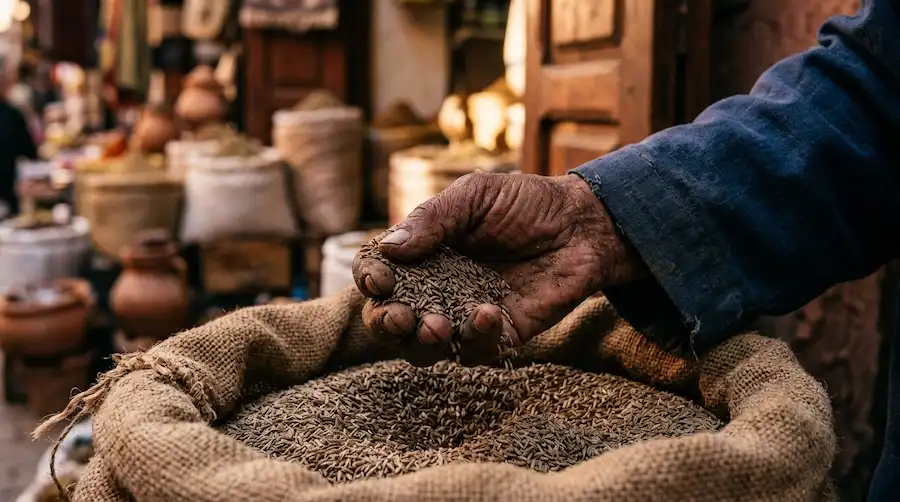
Moroccan cuisine runs on cumin. It appears in tagines, couscous, grilled meat rubs, harira soup, and kefta meatballs. The cumin sold loose in Marrakech’s medina souks is almost always fresher than anything available prepackaged abroad — the difference in aroma is immediately obvious when you open the bag. Buy it whole if you can find it; grinding your own before cooking releases a depth that pre-ground powder rarely achieves.
Saffron: High Reward, High Risk
Morocco is one of the world’s top saffron producers — the region around Taliouine, south of the High Atlas, yields threads considered among the finest globally. In the souks, however, saffron is also the most frequently faked product you’ll encounter. Genuine saffron threads are deep crimson-red, slightly sticky, and carry an unmistakable warm, honeyed, faintly metallic aroma. Yellow or orange powder sold as saffron is not saffron. Threads that are uniformly bright red from tip to end may have been dyed.
The smell test never lies. Real saffron has a complexity that synthetic colorings cannot replicate. Buy a small quantity — a gram or two — from a vendor who allows you to smell before you pay. Expect to pay a fair price; if the saffron is suspiciously cheap, trust that instinct.
The Supporting Cast Worth Your Attention
- Turmeric (quekoum): Used liberally in broths and sauces. Buy powdered; vivid amber-gold color signals freshness.
- Cinnamon (darca): Ceylon variety — softer, sweeter, and more nuanced than cassia. Sold as long, papery rolls. Used in both savory tagines and pastries.
- Paprika (felfel ahmar): Available sweet and hot. Moroccan paprika tends toward the smoky end of the spectrum. Ask to smell both varieties before choosing.
- Aniseed: Fragrant and used in tea, bread, and some traditional sweets. Buy a small bag — it travels extremely well.
- Ginger (skinjbir): Ground dried ginger is a staple in tagine spice blends and harira soup. Noticeably more pungent than supermarket versions.
- Preserved lemons: Technically a condiment, not a spice — but no Moroccan kitchen is without them. Salt-cured for weeks until the rind becomes tender and jammy. A single preserved lemon transforms a chicken tagine.
Where to Shop: The Best Spice Markets in Marrakech
Rahba Kedima (Place des Épices)
This is your anchor point. Rahba Kedima sits just off Souk Semmarine — the medina’s main commercial artery — and functions as the city’s aromatic center of gravity. Stalls here overflow with spices, dried herbs, medicinal roots, and products that blur the line between kitchen and apothecary. Older Amazigh women often sit at their stalls beside baskets of dried rose petals and beldi black soap, presiding over goods that span cooking, cosmetics, and traditional medicine simultaneously.
Spend time here without an agenda. Accept samples when offered. Ask what a vendor recommends for a specific dish. The conversation itself is part of the experience, and it will almost always lead you toward better purchases than pointing at random pyramids of powder.
Souk el Attarine
Running deeper into the medina from Rahba Kedima, Souk el Attarine has historically been the domain of perfumers and essential oil traders — attarine means “spice and perfume sellers” in Arabic. Today it offers a concentrated selection of aromatic goods: single-note spices sold by weight, orange blossom water, argan oil, and rose water. This is a particularly strong destination for high-quality argan oil, both culinary and cosmetic grades.
The Side Alleys Off the Main Souks
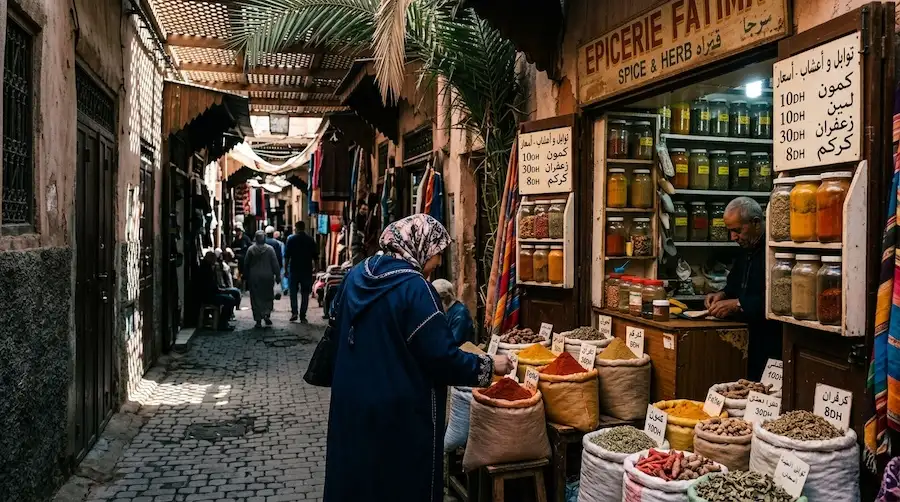
The most honest shopping in the medina often happens in the narrower lanes branching away from the main tourist routes. These are the stalls where Marrakchi residents buy their weekly spice supply — the vendors have no particular interest in inflating prices for a one-time visitor because their livelihood depends on repeat local customers. Prices are fairer, quality is often higher, and the interaction is more relaxed. The trade-off is that you need to wander with genuine curiosity rather than follow a map.
Practical Tips for Shopping the Spice Souks
Knowing what to buy is one thing. Getting good value without frustration is another. These are the tactics that make the difference between a satisfying morning in the souks and an expensive, chaotic one.
- Go early. The souks open around 9:00 AM. Vendors are freshest, the crowds are thinner, and the light is better for examining color and texture. By early afternoon on peak days, the pressure to buy increases noticeably.
- Carry small-denomination dirham notes. Vendors rarely have change for large bills, and producing exact amounts speeds things up considerably.
- Ask for vacuum sealing. Most vendors carry small heat-seal bags or ziplock pouches. Spices sealed airtight retain their potency far longer during travel.
- Negotiate — but start with genuine interest. Engage with the product first. Ask questions. Show real curiosity. Then, when price comes up, counter at around 60–70% of the first offer and work toward a middle point. Walking away slowly and genuinely often triggers a better offer.
- Buy small quantities of several things rather than large bags of one or two. Freshness matters more than volume, and you’ll use more variety if you bring it home.
- Learn a handful of phrases in Darija. “Bghit had” (I want this one), “shhal hada?” (how much is this?), and “shukran” (thank you) earn disproportionate goodwill and often improve the price you’re offered.
The Mistakes Most Visitors Make in the Marrakech Spice Market
Experience in the souks teaches certain lessons the hard way. These are the ones worth knowing before you go.
Buying saffron that isn’t saffron. This is the single most common and expensive mistake in the Moroccan spice market. Yellow powder, uniform bright-red threads with no aroma, or saffron priced at a fraction of what genuine threads cost — all of these are warning signs. Real saffron is always sold in small quantities and always commands a real price.
Shopping nearest to Jemaa el-Fnaa. The stalls immediately adjacent to the main square cater almost entirely to tourists and price accordingly. A five-minute walk deeper into the medina consistently yields better quality and fairer pricing. The effort is negligible; the difference is real.
Assuming all ras el hanout is the same. Prepackaged ras el hanout sold near tourist entry points is often a fraction of the complexity of what a dedicated spice vendor blends fresh. The packaging looks identical. The flavor is not.
Skipping the smell test. Color is easy to fake. Aroma is not. Every spice you’re considering buying deserves a direct smell before money changes hands. Any vendor worth buying from will expect this and welcome it.
What Most Articles About Marrakech Spices Don’t Tell You
The Apothecary Dimension of the Spice Stalls
Rahba Kedima is not purely a food market. Many of the vendors there function simultaneously as traditional herbalists — practitioners of a botanical healing tradition that predates modern pharmacology in Morocco by many centuries. Alongside cumin and paprika, their stalls carry dried wormwood (shiba) for digestive complaints, mastic resin for oral health, henna mixed with herbs for cosmetic use, and roots whose names don’t translate cleanly into any European language.
This apothecary dimension is a genuine part of the culture you’re stepping into, not a novelty for tourists. Marrakchi residents visit these stalls for remedies they trust. If you engage with it respectfully — asking what a particular herb is for rather than photographing it as exotica — you’ll leave with a much richer understanding of why the spice market holds the significance it does in this city.
Traveling Home with Spices: What Customs Actually Allows
This is the practical information almost no travel article covers, yet it matters enormously to anyone who spends real money in the souks. Most dried spices — cumin, cinnamon, paprika, ras el hanout, turmeric, aniseed — are entirely legal to carry in checked or carry-on luggage when traveling to Europe, North America, and most of the world. The key rules: they must be commercially packaged or sealed, clearly identifiable as food products, and free of soil or plant matter.
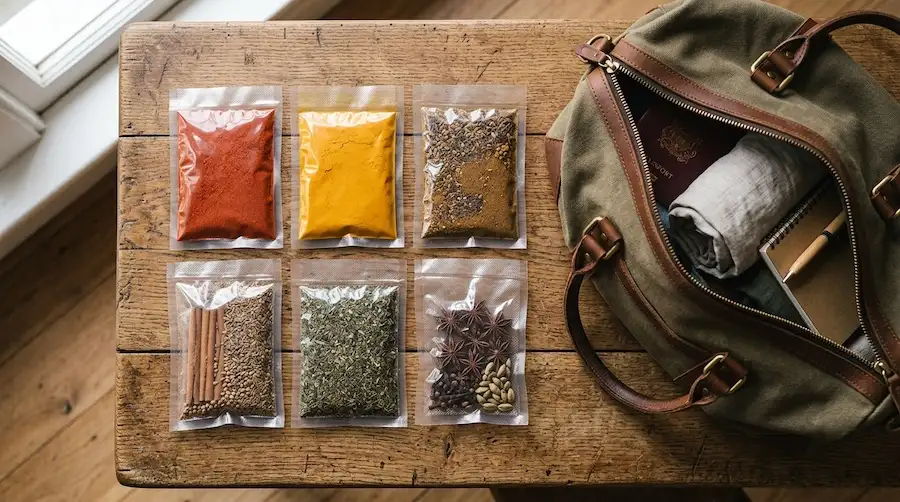
Preserved lemons require more care — they’re a wet product and count as a liquid or paste for carry-on purposes. Pack them in checked luggage. Argan oil follows standard liquid rules: 100ml or less in carry-on, unlimited in checked bags. Fresh plant material — leaves, stems, roots with soil — is restricted in most destinations and should be left behind entirely. When in doubt, ask your vendor to seal and label your purchases clearly. A small extra step at the market stall prevents a much larger problem at the airport.
Frequently Asked Questions About Spices in Marrakech
What is the best spice to buy in Marrakech?
Ras el hanout is the most unique and worthwhile purchase — you cannot replicate a vendor’s proprietary blend at home. After that, fresh cumin and genuine saffron threads offer the greatest quality difference compared to what’s available in supermarkets abroad.
How do I know if saffron is real in the Marrakech markets?
Smell it. Genuine saffron has a warm, complex, faintly honeyed aroma that synthetic colorings cannot mimic. Real threads are deep crimson, slightly sticky, and sold in small quantities at a real price. If it smells of nothing or looks uniformly bright red from root to tip, walk away.
Is bargaining expected when buying spices in Marrakech?
Yes, in most stalls — though some fixed-price shops near Place des Épices exist. The standard approach: engage genuinely with the product first, then counter at 60–70% of the initial price. Maintain good humor throughout. Aggressive bargaining or rudeness damages the interaction and rarely produces better outcomes.
Can I bring Marrakech spices back through airport customs?
Dried spices are almost universally permitted in both checked and carry-on luggage for travel to Europe and North America. Wet products like preserved lemons belong in checked bags. Avoid any fresh plant material with soil. Ask your vendor to seal and label purchases clearly before you leave the market.
Where exactly is the spice market in Marrakech?
The primary spice trading area is Rahba Kedima (Place des Épices), located just off Souk Semmarine in the northern medina. From Jemaa el-Fnaa, head north through the arched entrance to the souks — Rahba Kedima is a short walk along on your left, recognizable by its open square and densely stocked stalls.
Bring Marrakech’s Flavors Into Your Kitchen
The best argument for buying spices in Marrakech isn’t the price or the novelty — it’s that you will cook differently when you have genuinely fresh, well-sourced ingredients. A chicken tagine made with ras el hanout from Rahba Kedima and saffron threads from Taliouine tastes measurably different from the same recipe made with supermarket alternatives. That difference is the whole point.
Your next step: before your trip, write down three Moroccan dishes you want to cook at home. Use that list as your shopping framework in the souks. You’ll leave with a focused, purposeful selection rather than an overloaded bag of random powders — and every meal you cook from it will carry a clear memory of exactly where it came from. If you’re not traveling to Marrakech soon but want to start cooking with these flavors now, is the place to begin.