
Stepping off the plane into the warm, ochre-tinted air of Morocco is an unforgettable experience. The sights, the sounds of the bustling souks, and the aroma of exotic spices immediately draw you in. But while the heart of the city offers a concentrated dose of culture, the true magic of the surrounding region lies beyond the ancient Medina walls. To fully experience the sweeping landscapes of the Atlas Mountains, the coastal winds of Essaouira, or the rocky expanses of the desert at your own pace, securing your own set of wheels is often the best choice.
Navigating your options requires a bit of insider knowledge. As a crucial element of your overall Marrakech transport strategy, securing a reliable vehicle allows you to bypass rigid tour schedules and crowded buses. You gain the ultimate freedom to pull over for a roadside mint tea, photograph a goat perched high in an argan tree, or simply enjoy the open road.
This comprehensive guide breaks down everything you need to know about setting up a car rental in Marrakech. From deciphering local driving laws and understanding insurance policies to avoiding common pitfalls and choosing the perfect vehicle for your itinerary, you will find actionable advice to make your Moroccan road trip smooth, safe, and deeply rewarding.
Table of Contents
Why Consider a Car Rental in Marrakech?
You might be wondering if driving in North Africa is the right choice for your trip. The answer depends heavily on your itinerary. If your plans involve staying strictly within the old city walls—the Medina—a vehicle will be more of a burden than a benefit. The Medina is a labyrinth of narrow, pedestrian-heavy alleyways where only scooters, donkeys, and handcarts dare to navigate.
However, if you plan to use the city as a basecamp to explore the wider region, having your own vehicle transforms your trip. Here is why taking the wheel is highly advantageous:
- Unmatched Flexibility: You set the schedule. Want to leave for the mountains at dawn to beat the crowds? You can. Want to linger at a coastal seafood shack for an extra hour? No tour guide will rush you onto a bus.
- Cost-Effective for Groups: If you are traveling with family or a group of friends, splitting the cost of a daily rental and fuel is frequently cheaper than booking multiple seats on organized excursions.
- Access to Hidden Gems: Public transit routes are fixed, and tour buses only stop at partnered shops and major viewpoints. Driving yourself allows you to discover secluded Berber villages and untouched panoramic vistas.
Essential Requirements for Renting a Vehicle
Before you start browsing rental fleets, you need to ensure you meet the legal and administrative requirements to drive in Morocco. The paperwork is straightforward, but failing to bring the right documents will leave you stranded at the rental counter.
Age Restrictions
The legal driving age in Morocco is 18, but rental agencies operate under their own risk management policies. Most companies require you to be at least 21 years old to book a standard car rental in Marrakech. If you are eyeing a larger SUV or a premium vehicle, the minimum age often jumps to 23 or 25. Furthermore, if you are under 25, be prepared to pay a “young driver surcharge,” which is a daily fee added to your final bill.
Driver’s License and IDP
You must present a valid driver’s license from your home country, and you must have held it for at least one to two years, depending on the agency. While your domestic license is generally accepted for short tourist visits (up to three months), carrying an International Driving Permit (IDP) is highly recommended. If you are pulled over at a police checkpoint or involved in an incident, an IDP translates your credentials into French and Arabic, significantly smoothing out interactions with local authorities.
Credit Card Requirements
You will need a credit card—not a debit card—in the primary driver’s name. Rental agencies place a substantial block on your card to cover the security deposit. This hold can range from a few hundred to over a thousand dollars, depending on the vehicle class and the insurance package you select. Ensure your credit limit can accommodate this hold alongside your other vacation expenses.
Understanding Moroccan Traffic Rules and Driving Culture
Driving in Morocco is an adventure in itself. The roads range from pristine, multi-lane toll highways (autoroutes) to winding, potholed mountain passes. Adapting to the local driving culture is essential for a stress-free journey.
Speed Limits and Strict Enforcement
Moroccan authorities take speed limits very seriously. The general limits are:
- 60 km/h (37 mph) in urban areas.
- 100 km/h (62 mph) on open rural roads.
- 120 km/h (75 mph) on toll highways.
You will frequently encounter Royal Gendarmerie checkpoints, especially at the entrances and exits of towns. They use radar guns meticulously. If you are caught speeding, expect to pay the fine on the spot in cash (Moroccan Dirhams). Always reduce your speed when approaching a checkpoint, roll down your window, put on a smile, and wait for the officer to wave you through or signal you to stop.
The Organized Chaos of City Driving
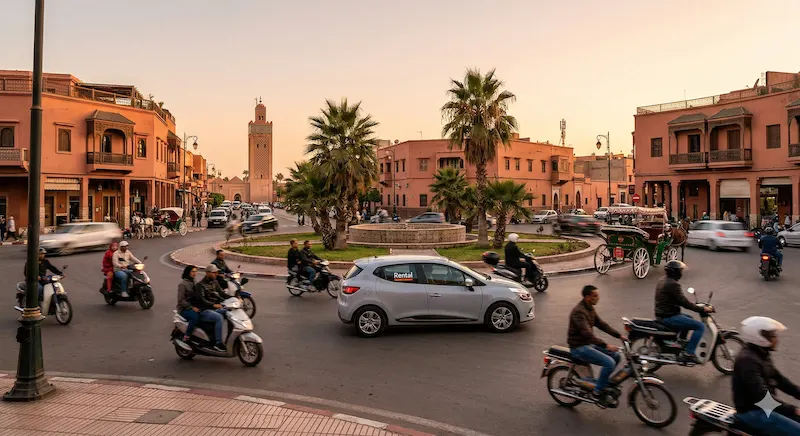
Traffic within the city limits can feel chaotic to the uninitiated. Scooters will weave through narrow gaps, pedestrians will cross outside of marked zones, and horse-drawn carriages share the lanes. Defensive driving is your best tool here. Maintain a moderate speed, use your mirrors constantly, and do not expect locals to use turn signals reliably.
Mastering the Roundabouts
Roundabouts are plentiful. The golden rule here is to pay attention to signage. In traditional roundabouts, vehicles already circulating have the right of way. However, you will encounter older intersections where vehicles entering from the right have priority. Look for the “Cédez le passage” (Yield) sign. If you don’t see one, yield to the right.
Choosing the Right Rental Company
When searching for a car rental in Marrakech, you will be faced with a choice between globally recognized brands (like Hertz, Avis, or Europcar) and independent Moroccan agencies. Both have distinct advantages.
International Franchises
Booking with a familiar international brand offers peace of mind. Their booking systems are streamlined, their fleets are usually newer, and their insurance policies are standardized. You can easily dispute charges through their corporate customer service if something goes wrong. However, you pay a premium for this security, and their base rates are generally higher.
Local Moroccan Agencies
Local companies often provide highly competitive rates, sometimes up to 30% cheaper than the big names. Many operate near the airport or in the Gueliz district. They are often more flexible, sometimes accepting cash deposits or offering personalized delivery to your hotel. The trade-off is that their vehicles might have a few more kilometers on the odometer, and resolving disputes can be more complex. If you choose a local agency, read recent online reviews carefully and document the vehicle’s condition meticulously before driving away.
Insurance and Hidden Fees: Protecting Yourself
Insurance is the most critical aspect of your booking. Do not cut corners here, as minor scrapes are common in tight parking lots or narrow village roads.
Collision Damage Waiver (CDW)
A basic CDW is usually included in your daily rate, but it comes with a high deductible (excess). If the car is damaged, you are liable to pay up to that deductible amount before the insurance kicks in. To protect your wallet, consider upgrading to Super CDW (or zero-deductible coverage). While it increases your daily cost, it removes the financial anxiety of a minor fender bender.
Tire and Glass Coverage
Standard CDW rarely covers damage to the undercarriage, tires, or windshields. If you plan on driving through the Atlas Mountains, where rockfalls can occur, or taking unpaved tracks, adding specific tire and glass protection is a very smart move.
The Pre-Rental Inspection
This is your most important task before leaving the lot. Walk around the vehicle with the agent and insist they mark every single scratch, dent, or upholstery stain on the rental agreement. Take high-resolution photos and a continuous video of the car’s exterior, interior, fuel gauge, and mileage. This digital evidence is your absolute best defense against unwarranted damage claims upon return.
What Type of Vehicle Should You Rent?
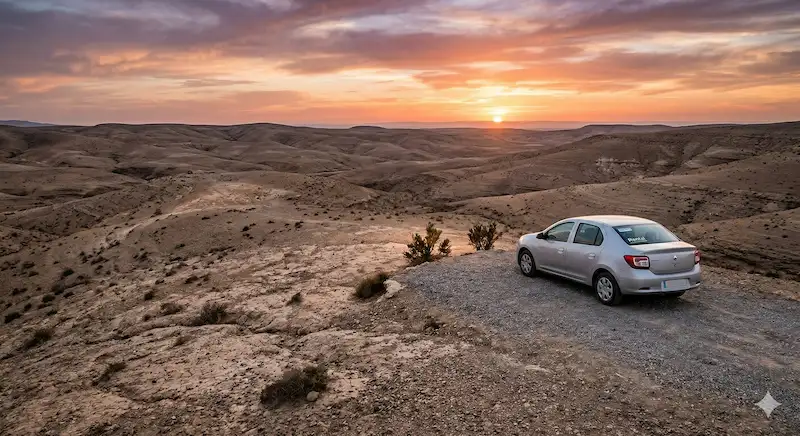
Your vehicle choice should be dictated by your planned routes and the number of passengers.
Compact Economy Cars
If you are a couple planning to stick to the toll highways to visit coastal cities like Casablanca, Rabat, or Essaouira, a compact car like a Dacia Sandero or Renault Clio is perfect. They are fuel-efficient, easy to park in tight spaces, and handle the smooth autoroutes beautifully.
SUVs and 4x4s
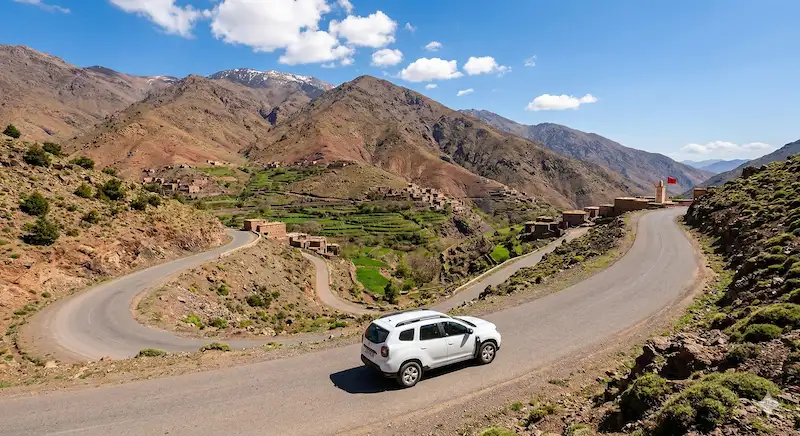
If your itinerary involves heading south toward Ouarzazate, navigating the steep inclines of the Tizi n’Tichka pass, or exploring the rocky terrain of the Agafay Desert, an SUV offers much-needed ground clearance and a more comfortable ride. Vehicles like the Dacia Duster are incredibly popular in Morocco for this exact reason—they are rugged enough for the mountains but still economical. For families traveling with children, the extra cabin space and luggage capacity of an SUV ensure a much happier journey.
Picking Up Your Rental at Marrakech Menara Airport (RAK)
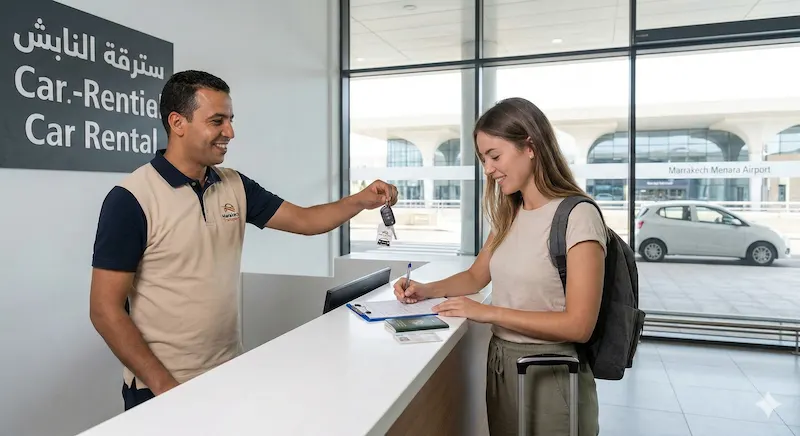
Most travelers choose to pick up their car directly upon arrival. The airport process is relatively seamless if you know what to expect.
Once you clear customs and collect your luggage, you will find the major rental desks located directly in the arrivals hall. During peak tourist seasons (spring and autumn), the lines can be long. Ensure you have your reservation number, driver’s license, passport, and credit card ready to expedite the process.
After completing the paperwork, you will be directed to the rental parking lot, which is a short walk just outside the terminal. Take your time during the vehicle inspection here. The lighting is good, and it is the best place to familiarize yourself with the car’s controls—headlights, windshield wipers, and air conditioning—before merging onto the busy Avenue Guemassa heading toward the city.
Top Road Trips You Can Take With Your Rental
With the keys in your hand, the entirety of southern Morocco opens up to you. Here are some of the most spectacular routes to consider.
The Coastal Breeze of Essaouira
A straight, comfortable three-hour drive west takes you to the charming port city of Essaouira. The route is well-paved and relatively flat. Along the way, keep an eye out for the famous argan trees. Essaouira itself offers a relaxed vibe, historic ramparts, and fantastic seafood, providing a stark, breezy contrast to the inland heat.
The Peaks of the Atlas Mountains
Heading south or east plunges you into the breathtaking scenery of the High Atlas. You can drive the winding roads to the Ourika Valley, known for its riverside cafes and waterfalls. Alternatively, tackle the legendary Tizi n’Tichka pass. The switchbacks are thrilling, the drops are sheer, and the views of the terraced Berber villages are unparalleled. Ensure your brakes are in good condition and take the corners slowly.
The Agafay Desert Experience
You do not need to drive eight hours to the Sahara to experience the desert. Just an hour outside the city lies the Agafay Desert. While it lacks rolling sand dunes, its stark, rocky, lunar-like landscape is mesmerizing. An SUV is highly recommended if you plan to navigate the dirt tracks leading to the luxury desert camps hidden in this arid expanse.
Practical Tips for Parking and Navigation
Finding your way and securing your vehicle require a slightly different approach than you might be used to back home.
Navigating the Roads
Google Maps and Waze both work exceptionally well in Morocco. However, cell service can drop out completely when you are deep in the mountains or the desert. Before you leave your hotel’s Wi-Fi, download offline maps of your entire route. Waze is particularly popular among locals as it frequently alerts drivers to upcoming police checkpoints and hidden speed cameras.
The “Guardiens de Voitures”
When you park on the street in any Moroccan town, you will almost certainly be approached by a man wearing a high-visibility yellow or orange vest. These are the informal parking attendants, known as guardiens de voitures. They will guide you into tight spots and keep an eye on your vehicle while you are away. It is customary to pay them a few Dirhams (usually 5 to 10 MAD for a few hours, or 20 MAD for overnight parking) when you return to your car. Keep a stash of coins in your center console specifically for this purpose.
What to Do in Case of an Emergency or Breakdown
Preparation is key. Ensure your rental agent provides you with a 24-hour emergency roadside assistance number before you leave the lot.
If you experience a mechanical breakdown, pull over as far to the right as safely possible, turn on your hazard lights, and set up your reflective warning triangle (this should be in the trunk of your rental). Call the agency’s emergency line immediately. Do not attempt to have the car fixed by a local mechanic without explicit authorization from the rental company, as this will void your insurance.
In the event of an accident involving another vehicle, do not move the cars. You must wait for the police (call 19 in urban areas, or 177 for the Royal Gendarmerie in rural areas) to arrive and draft an official accident report, known as a constat à l’amiable. Your insurance company will not process a claim without this document.
Conclusion: The Open Road Awaits
Opting for a car rental in Marrakech is a decision that unlocks the vast, diverse beauty of Morocco. While the traffic may initially seem intimidating and the administrative steps require attention to detail, the reward is absolute autonomy. You are no longer just a spectator on a scheduled tour; you are an active explorer charting your own course through mountain passes, ancient kasbahs, and vibrant coastal towns.
By securing the right insurance, respecting local driving customs, and planning your routes carefully, you minimize the risks and maximize the adventure. The landscapes of Morocco are waiting to be discovered, and there is no better way to see them than through your own windshield.
Marrakech Car Rental FAQs: Everything You Need to Know
Do I need an International Driving Permit (IDP) to rent a car in Marrakech?
While you can legally drive in Morocco for up to three months using a valid driver’s license from your home country, carrying an International Driving Permit (IDP) is highly recommended. If you encounter a police checkpoint or are involved in an incident, the IDP translates your credentials into French and Arabic, which significantly speeds up the process with local authorities
Is it safe for tourists to drive in Marrakech and the surrounding areas?
Yes, it is generally safe, but it requires highly defensive driving. Inside the city, traffic can be chaotic, with scooters, pedestrians, and carts sharing the road unpredictably. Outside the city, the major toll highways (autoroutes) are in excellent condition. However, rural mountain roads can be narrow, winding, and lack guardrails, so always drive cautiously and avoid driving at night.
Can I rent a car in Marrakech without a credit card?
Most international and major local rental agencies strictly require a credit card in the primary driver’s name to hold a security deposit. A debit card will usually be rejected for the deposit hold. While a few smaller, independent local shops might accept a large cash deposit, it is less secure and generally not recommended.
What type of vehicle is best for a Moroccan road trip?
Your ideal vehicle depends entirely on your itinerary. If you are sticking to major highways to visit coastal cities like Essaouira or Casablanca, an economical compact car is perfect. However, if your plans include the steep passes of the Atlas Mountains or the rocky terrain of the Agafay Desert, renting an SUV or a 4×4 will give you the necessary ground clearance, power, and comfort.
How do police checkpoints work in Morocco?
Police and Royal Gendarmerie checkpoints are very common, especially at the entrances and exits of towns. You will see warning signs leading up to them. Always slow down immediately, roll down your window, and follow the officer’s hand signals. Often, they will just wave you through. If they signal you to stop, be polite, and have your driver’s license, IDP, and rental documents ready.
Ready to Hit the Road?
Start planning your itinerary today! Compare rates from top providers early, secure your ideal vehicle, and map out the stops that matter most to you. Ensure you review the rest of our transportation hub to seamlessly integrate your driving plans with airport transfers and local Medina navigation.